Counting fu
A hand of 4 han or less is worth what its han and fu say together. Fu (minipoints) come from the shape of the hand and how it won. From 5 han (mangan) up, fu no longer change the score, so there is no need to count them.
Unless a diagram says otherwise, the examples use EMA rules, in the East round, sitting South (non-dealer), winning by ron without riichi. Under each diagram are the yaku and the fu breakdown, worked out by the same engine that marks the quiz.
The steps
- Start with 20 fu (futei).
- Add fu for how the hand won: 10 for a ron with a closed hand, 2 for a tsumo.
- Add fu for each set. Runs are worth 0. Triplets and quads are in the table below.
- Add fu for the pair: 2 if it is a pair of yakuhai tiles (a dragon, the seat wind or the round wind).
- Add fu for the wait: 2 for a closed (kanchan), edge (penchan) or pair (tanki) wait. Two-sided (ryanmen) and double-pair (shanpon) waits are worth 0.
- Round up to the next 10 (32 becomes 40).
| Set | Open | Concealed |
|---|---|---|
| Triplet of simples (2–8) | 2 | 4 |
| Triplet of terminals or honours | 4 | 8 |
| Quad of simples | 8 | 16 |
| Quad of terminals or honours | 16 | 32 |
Open triplets are called with pon or completed by ron; concealed ones are made in the hand. Terminals and honours are the 1s, the 9s and the honour tiles.
Quads
Four identical tiles declared as a kan make a quad, worth four times the fu of the same triplet. A quad called from a discard (daiminkan) or made by adding a tile to a called triplet (shouminkan) is open; a concealed quad (ankan) made from four tiles in the hand counts like a concealed triplet.
- A concealed quad keeps the hand closed, so the 10 fu for a closed ron and riichi still apply.
- A concealed quad of terminals or honours is 32 fu on its own: even with nothing else, a closed ron is 20 + 10 + 32 = 62, rounded up to 70 fu.
- Four identical tiles are not a quad unless declared as a kan. Depending on how the hand is split, they count as parts of other sets and the pair: a triplet plus one tile of another set, a pair plus two tiles of other sets, and so on.
Example: rounding up
The called white and green dragons are open triplets of honours, 4 fu each. The red dragon pair is 2 fu and the single wait on it is 2 more: 32 in all, rounded up to 40. The hand is open, so it gets no 10 fu for a closed ron.
East round, South seat, Non-dealer, RonDora indicator 
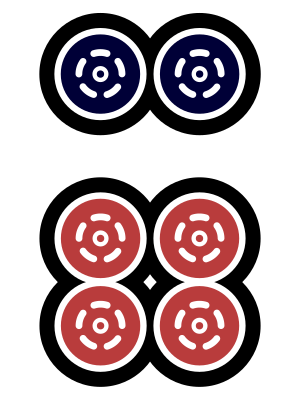
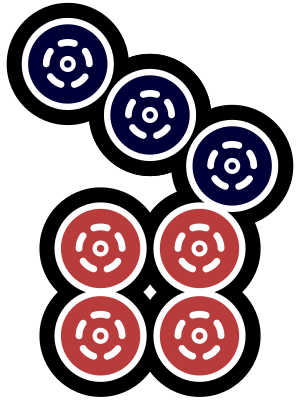
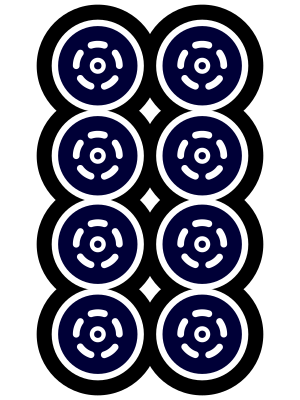
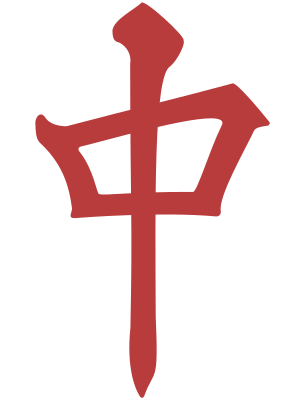

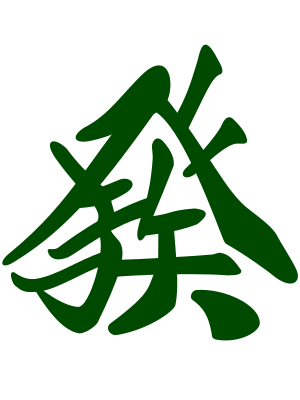
Total 32 → 40 fuPoints: 4 han 40 fu Mangan → 8,000
A triplet completed by ron is open
Triplets in the hand are concealed, but a triplet completed by ron counts as open. This hand waits on 3-man or 8-sou (shanpon) and wins by ron on the 8-sou, so 888-sou is an open triplet (2 fu).
East round, South seat, Non-dealer, RonDora indicator
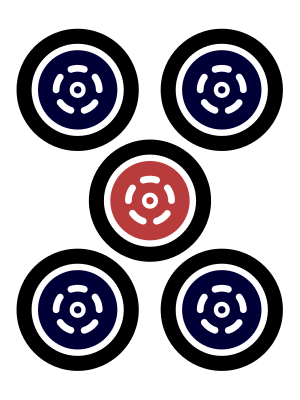
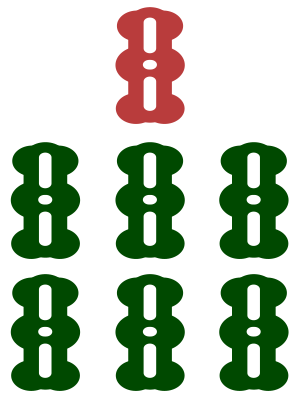
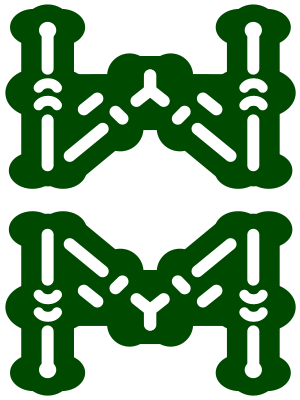
Total 40 → 40 fuPoints: 1 han 40 fu → 1,300
Won by tsumo, 888-sou is concealed too and the hand gets sanankou (2 han). The fu are 20 + 2 + 4 + 4 + 4 = 34, rounded up to 40.
East round, South seat, Non-dealer, TsumoDora indicator
Total 34 → 40 fuPoints: 4 han 40 fu Mangan → 2,000 / 4,000
Concealed triplets of terminals and honours
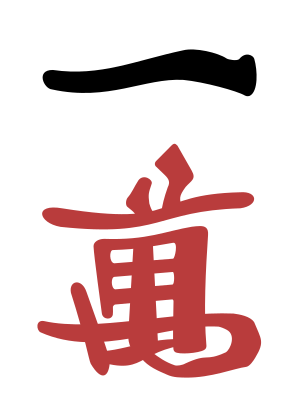
A concealed triplet of terminals or honours is 8 fu, so the fu climb fast. This hand has three of them (24 fu) and a closed wait (2 fu): 20 + 10 + 24 + 2 = 56, rounded up to 60.
East round, South seat, Non-dealer, RonDora indicator 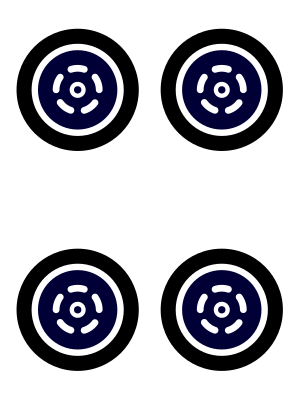
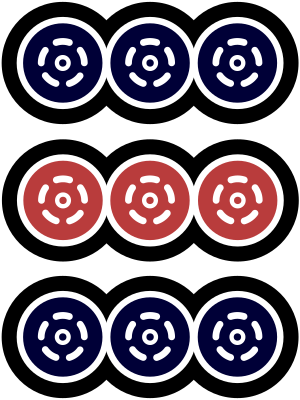
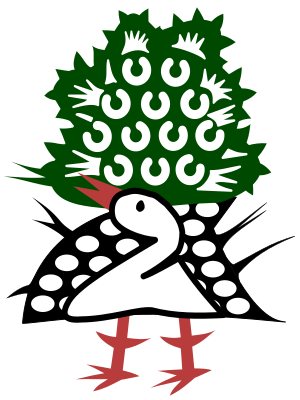
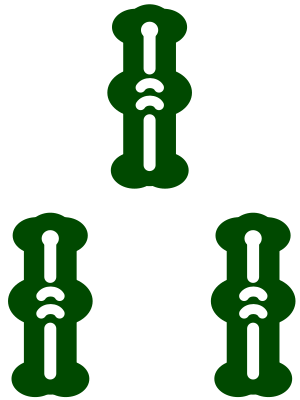
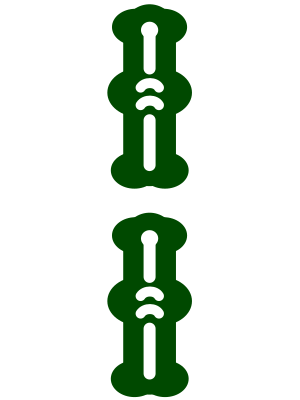
Total 56 → 60 fuPoints: 3 han 60 fu Mangan → 8,000
3 han 60 fu is a mangan (8,000) under EMA rules, which round it up (how the points table works).
Wait fu, and how the winning tile is read
The same winning tile can sometimes complete different shapes, depending on how the hand is split. The hand is then scored the way that is worth the most. Here the 3-man completes either 123-man (an edge wait, 2 fu) or 345-man (a two-sided wait). Read as two-sided, the hand gets pinfu (1 han) and is worth more, so that is how it counts.
East round, South seat, Non-dealer, Ron, RiichiDora indicator
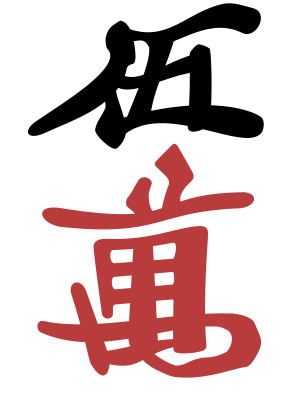
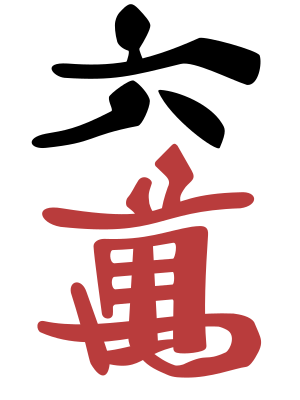
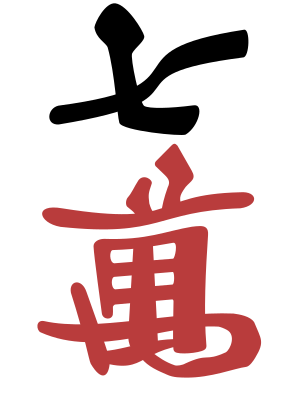
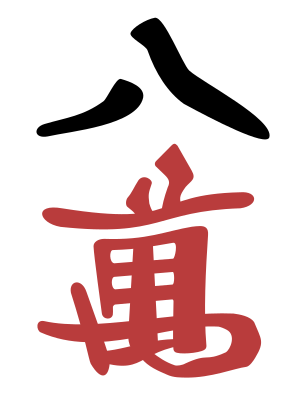
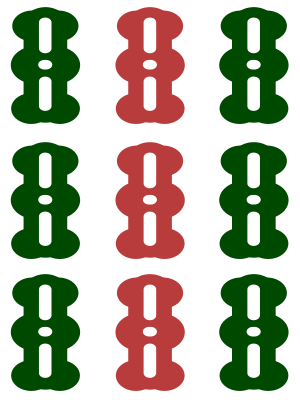
Total 30 → 30 fuPoints: 3 han 30 fu → 3,900
Pinfu
Pinfu is a closed hand of four runs and a pair that is not yakuhai, won on a two-sided wait. Nothing adds fu, so a ron is 20 + 10 = 30 fu.
East round, South seat, Non-dealer, RonDora indicator 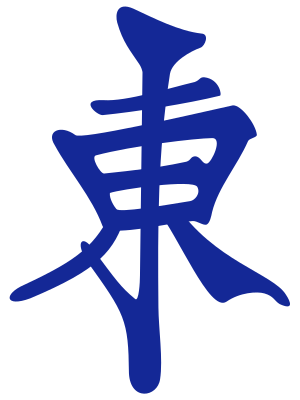
Total 30 → 30 fuPoints: 2 han 30 fu → 2,000
A pinfu hand won by tsumo gets no 2 fu for the tsumo and stays at 20 fu.
East round, South seat, Non-dealer, TsumoDora indicator
Total 20 → 20 fuPoints: 3 han 20 fu → 700 / 1,300
Chiitoitsu is 25 fu
Seven pairs (chiitoitsu) is always 25 fu: nothing is added and it is not rounded.
East round, South seat, Non-dealer, RonDora indicator
Total 25 → 25 fuPoints: 2 han 25 fu → 1,600
Open hands that come to 20 fu
An open hand gets no 10 fu for a closed ron, so an open hand of runs, a plain pair and a two-sided wait comes to 20 fu. Such a hand (open pinfu) counts as 30 fu.
East round, South seat, Non-dealer, RonDora indicator
Total 22 → 30 fuPoints: 1 han 30 fu → 1,000
A double-wind pair (rules differ)
When the round wind and the seat wind are the same (South seat in the South round), a pair of that wind is a double-wind pair. It is 2 fu under EMA rules and 4 fu under Mahjong Soul rules. This hand sits South in the South round with a pair of South. Under EMA it is 20 + 10 + 8 + 2 = 40 fu.
South round, South seat, Non-dealer, Ron, RiichiDora indicator
Total 40 → 40 fuPoints: 1 han 40 fu → 1,300
Under Mahjong Soul rules the pair is 4 fu, and 42 rounds up to 50.
South round, South seat, Non-dealer, Ron, RiichiDora indicator
Total 42 → 50 fuPoints: 1 han 50 fu → 1,600 (Mahjong Soul rules)
Every difference between the two rule sets is listed in rule differences.