The yaku
A hand needs at least one yaku to win. This page lists the yaku by han. Yaku that depend on the moment of the win, such as ippatsu and haitei, are under situational yaku.
Unless a diagram says otherwise, the examples use EMA rules, in the East round, sitting South (non-dealer), winning by ron without riichi. Under each diagram are the yaku and the score, worked out by the same engine that marks the quiz.
The list
“Closed” is the han with no calls, “Open” the han after a chii or pon. “—” means the yaku needs a closed hand. Yaku that lose one han when open are called kuisagari yaku.
| Yaku | Closed | Open | Requirement |
|---|---|---|---|
| Riichi | 1 | — | Declare riichi with a closed, ready hand |
| Menzen tsumo | 1 | — | Win by tsumo with a closed hand |
| Pinfu | 1 | — | Four runs, a pair that is not yakuhai, won on a two-sided wait |
| Iipeikou | 1 | — | Two identical runs |
| Tanyao | 1 | 1 | Simples (2–8) only |
| Yakuhai: haku | 1 | 1 | A triplet of white dragons |
| Yakuhai: hatsu | 1 | 1 | A triplet of green dragons |
| Yakuhai: chun | 1 | 1 | A triplet of red dragons |
| Yakuhai: seat wind | 1 | 1 | A triplet of your seat wind |
| Yakuhai: round wind | 1 | 1 | A triplet of the round wind |
| Chiitoitsu | 2 | — | Seven different pairs |
| Sanshoku doujun | 2 | 1 | The same run in all three suits |
| Ittsuu | 2 | 1 | 123, 456 and 789 in one suit |
| Chanta | 2 | 1 | Every set and the pair hold a terminal or honour, with at least one run and one honour |
| Sanshoku doukou | 2 | 2 | The same triplet in all three suits |
| Sanankou | 2 | 2 | Three concealed triplets |
| Toitoi | 2 | 2 | Four triplets |
| Shousangen | 2 | 2 | Two dragon triplets and a dragon pair |
| Honroutou | 2 | 2 | Terminals and honours only |
| Ryanpeikou | 3 | — | Two sets of iipeikou |
| Honitsu | 3 | 2 | One suit plus honours |
| Junchan | 3 | 2 | Every set and the pair hold a 1 or 9, with no honours and at least one run |
| Chinitsu | 6 | 5 | One suit only |
Yaku add up. Dora are not yaku: a hand with dora and no yaku cannot win.
Besides the dora shown by the dora indicator, each kan turns over another indicator (kan dora), and a player who wins after riichi also counts the ura dora, shown by the tiles under the indicators. Red fives (aka dora) are not used under EMA rules; Mahjong Soul has one red five in each suit, each worth 1 han. Every dora adds 1 han and none is a yaku.
Yaku that ask for triplets (yakuhai, sanshoku doukou, sanankou, toitoi, shousangen and so on) accept quads in their place. A concealed quad counts as a concealed triplet for sanankou. The yaku that need quads are under yaku with quads.
1 han
Pinfu and iipeikou both need a closed hand. This hand has two runs of 123-man (iipeikou) and waits two-sided on 78-sou, so it also has pinfu.
East round, South seat, Non-dealer, RonDora indicator 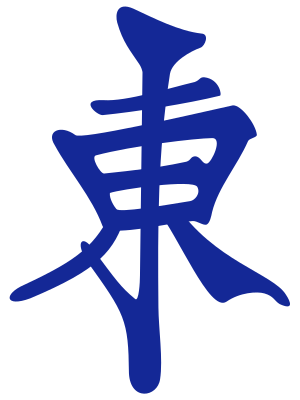
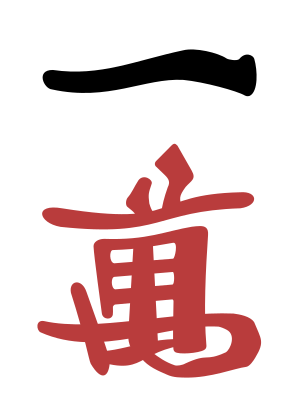
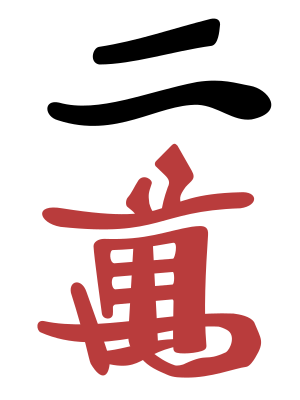
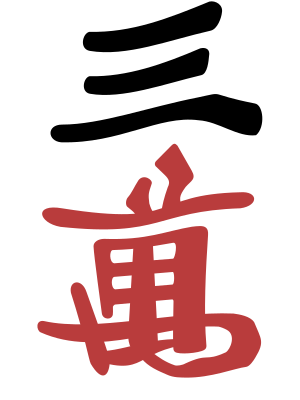
Total 30 → 30 fuPoints: 2 han 30 fu → 2,000
Tanyao counts with an open hand too (kuitan, allowed by both EMA and Mahjong Soul rules).
East round, South seat, Non-dealer, RonDora indicator 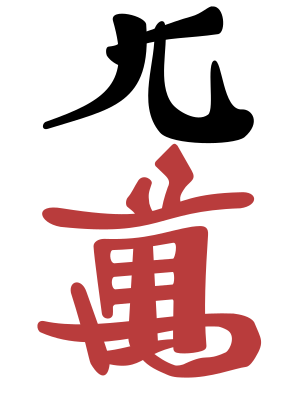
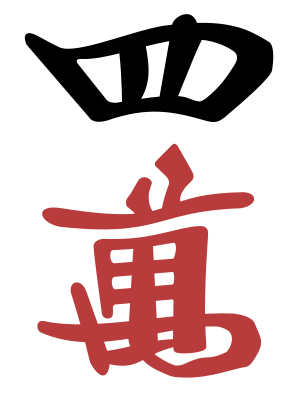
Total 22 → 30 fuPoints: 1 han 30 fu → 1,000
Yakuhai is a triplet of dragons, your seat wind or the round wind. It is worth 1 han after a pon too, so it is a common yaku for open hands.
East round, South seat, Non-dealer, RonDora indicator 

Total 24 → 30 fuPoints: 1 han 30 fu → 1,000
When the seat wind and the round wind are the same (East for the dealer in the East round), a triplet of it counts for both: 2 han.
East round, East seat, Dealer, RonDora indicator
Total 24 → 30 fuPoints: 2 han 30 fu → 2,900
2 han
Chiitoitsu needs a closed hand and is always 25 fu.
East round, South seat, Non-dealer, RonDora indicator
Total 25 → 25 fuPoints: 2 han 25 fu → 1,600
Sanshoku doujun is 2 han closed and drops to 1 han open.
East round, South seat, Non-dealer, RonDora indicator

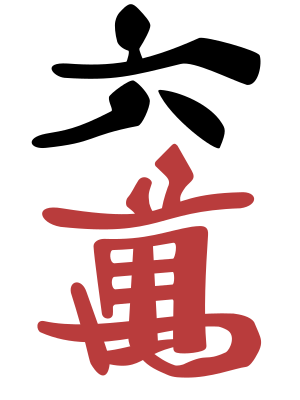
Total 34 → 40 fuPoints: 2 han 40 fu → 2,600
East round, South seat, Non-dealer, RonDora indicator
Total 24 → 30 fuPoints: 1 han 30 fu → 1,000
Ittsuu is a kuisagari yaku too. This hand has an open ittsuu (1 han), honitsu (2 han open) and yakuhai for the green dragons: 4 han 30 fu.
East round, South seat, Non-dealer, RonDora indicator
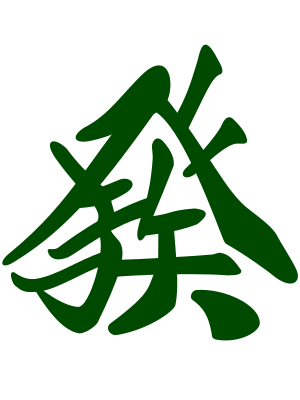
Total 28 → 30 fuPoints: 4 han 30 fu Mangan → 8,000
Chanta is a hand where every set and the pair hold a terminal or honour (a 1, a 9 or an honour).
East round, South seat, Non-dealer, RonDora indicator
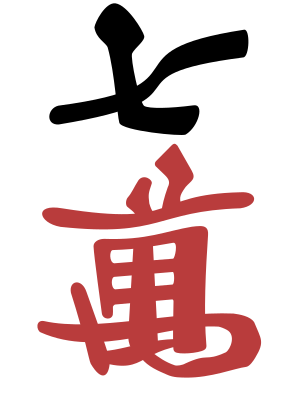
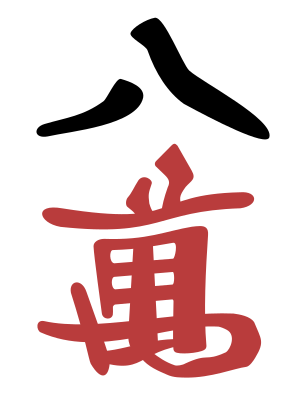
Total 34 → 40 fuPoints: 2 han 40 fu → 2,600
Sanshoku doukou is the same triplet in all three suits. This hand wins by ron on the 2-sou, so 222-sou is an open triplet and there is no sanankou.
East round, South seat, Non-dealer, RonDora indicator
Total 40 → 40 fuPoints: 2 han 40 fu → 2,600
Sanankou is three concealed triplets. Won by tsumo, the last triplet is concealed as well.
East round, South seat, Non-dealer, TsumoDora indicator
Total 34 → 40 fuPoints: 4 han 40 fu Mangan → 2,000 / 4,000
Toitoi is four triplets. It stays 2 han when open.
East round, South seat, Non-dealer, RonDora indicator
Total 32 → 40 fuPoints: 3 han 40 fu → 5,200
Shousangen is two dragon triplets and a dragon pair. The two triplets are yakuhai as well, so it is really worth 4 han.
East round, South seat, Non-dealer, RonDora indicator
Honroutou is terminals and honours only. It always comes with toitoi or chiitoitsu. In this hand the South pair is not yakuhai for the West seat.
East round, West seat, Non-dealer, RonDora indicator
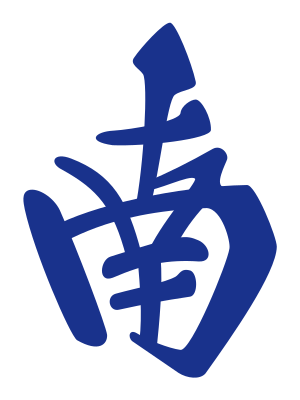
Total 46 → 50 fuPoints: 4 han 50 fu Mangan → 8,000
3 han and more
Ryanpeikou is two sets of iipeikou. It can also be read as chiitoitsu, but ryanpeikou is worth more, so that is how it counts.
East round, South seat, Non-dealer, RonDora indicator
Total 32 → 40 fuPoints: 3 han 40 fu → 5,200
Honitsu is one suit plus honours. It goes with chiitoitsu too.
East round, South seat, Non-dealer, RonDora indicator
Junchan is a hand where every set and the pair hold a 1 or a 9, with no honours and at least one run.
East round, South seat, Non-dealer, TsumoDora indicator
Chinitsu is one suit only, 6 han closed. The Chinitsu Trainer’s guides practise its waits and scores in depth.
East round, South seat, Non-dealer, TsumoDora indicator
Situational yaku
These yaku come from the moment of the win, not from the shape of the hand. They add up with the other yaku as usual.
| Yaku | Han | Requirement |
|---|---|---|
| Ippatsu | 1 | Win after riichi before your own next draw has passed, with no call or kan by anyone in between |
| Rinshan kaihou | 1 | Win on the replacement tile drawn after a kan. It is a tsumo win, so the 2 fu for tsumo count |
| Chankan | 1 | Win by ron on the tile another player adds to a called triplet to make a quad |
| Haitei | 1 | Win by tsumo on the last tile of the wall |
| Houtei | 1 | Win by ron on the last discard, after the wall has run out |
| Daburu riichi | 2 | Declare riichi on your first turn, before any call. It replaces the 1 han of riichi |
| Tenhou | Yakuman | The dealer’s starting hand is already complete |
| Chiihou | Yakuman | A non-dealer wins by tsumo on their first draw, before any call |
Ippatsu and daburu riichi need riichi, so they need a closed hand. Rinshan kaihou, chankan, haitei and houtei are 1 han in open hands too.
Yaku with quads
These yaku need quads (four identical tiles declared as a kan).
- Sankantsu: three quads, open or concealed. 2 han, closed or open. It often comes with toitoi or sanankou.
- Suukantsu: four quads. A yakuman (a single one under both EMA and Mahjong Soul rules).
Yakuman
A yakuman is scored without counting han, at four times a mangan (32,000 for a non-dealer ron). Yakuman and regular yaku do not add up. Under EMA rules yakuman do not stack and there are no double yakuman. Under Mahjong Soul rules some yakuman are double, and several yakuman add up.
| Yakuman | EMA | Mahjong Soul |
|---|---|---|
| Kokushi musou | Yakuman | Yakuman |
| Kokushi musou (13-sided wait) | Yakuman | Double yakuman |
| Chuuren poutou | Yakuman | Yakuman |
| Junsei chuuren poutou | Yakuman | Double yakuman |
| Suuankou | Yakuman | Yakuman |
| Suuankou tanki | Yakuman | Double yakuman |
| Ryuuiisou | Yakuman | Yakuman |
| Chinroutou | Yakuman | Yakuman |
| Tsuuiisou | Yakuman | Yakuman |
| Daisangen | Yakuman | Yakuman |
| Shousuushii | Yakuman | Yakuman |
| Daisuushii | Yakuman | Double yakuman |
| Daichisei | — | Double yakuman |
Daichisei is chiitoitsu of the seven honours. Only Mahjong Soul rules have it.
Kokushi musou is one of each of the 13 terminals and honours, plus one more of any of them.
East round, South seat, Non-dealer, RonDora indicator
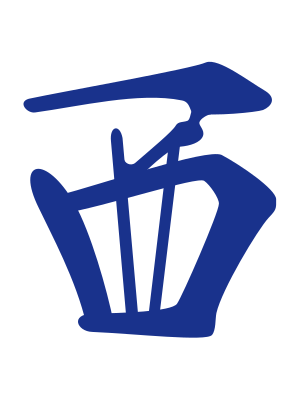
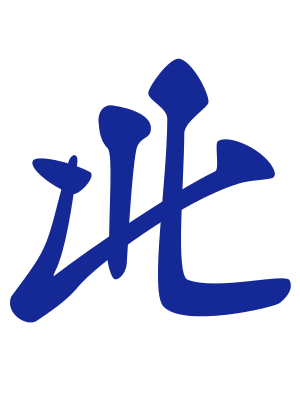
Suuankou is four concealed triplets. Winning a double-pair wait by ron makes the last triplet open, so it is not suuankou.
East round, South seat, Non-dealer, TsumoDora indicator
East round, South seat, Non-dealer, RonDora indicator
Ryuuiisou is 2, 3, 4, 6 and 8-sou and green dragons only. Under both EMA and Mahjong Soul rules it needs no green dragon.
East round, South seat, Non-dealer, RonDora indicator
A hand that is both daisangen and tsuuiisou is one yakuman under EMA rules and a double yakuman under Mahjong Soul rules.
East round, South seat, Non-dealer, RonDora indicator
East round, South seat, Non-dealer, RonDora indicator
Hands with no yaku
An open hand cannot have riichi, menzen tsumo, pinfu or any other closed-only yaku. This hand is open, has no tanyao (it holds a 1 and 9s) and no yakuhai, so it cannot win even though its shape is complete.
East round, South seat, Non-dealer, RonDora indicator