How to read chinitsu waits
In a hand of one suit, the same tile can belong to several blocks at once. That is why chinitsu waits are easy to miss even for experienced players. This guide starts from the basic waits and builds a routine you can use at the table and in the quiz.
All diagrams on this page use man (character) tiles, but the suit makes no difference to the shape.
The five basic waits
A complete hand has four sets and a pair. A set is a run of three in a row (like 345) or a triplet of the same tile (like 777). A tenpai hand of 13 tiles is one tile short, and the missing tile completes one of these five basic shapes.
Ryanmen (two-sided): two tiles in a row, open at both ends. Here 34 waits on 2 or 5.
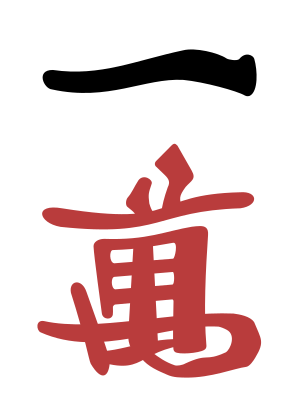
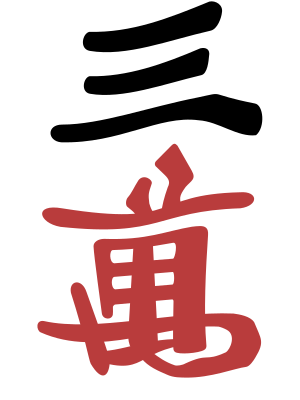
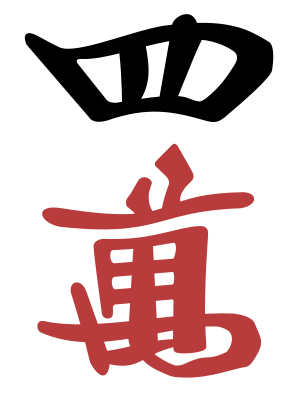
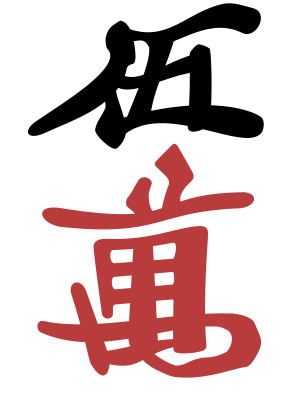
Kanchan (closed): two tiles with a gap. 35 waits only on 4.
Penchan (edge): 12 can only become 123, so it waits on 3. In the same way, 89 waits on 7.
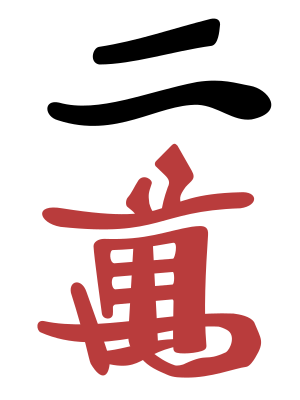
Shanpon (two pairs): either pair can become a triplet, and the other stays the pair.
Tanki (single): the hand is four sets and one lone tile, which waits to become the pair.
Why one-suit hands are hard
With only one suit, a group of tiles can usually be read more than one way. Take 3334. As 333 + 4 it is a tanki on 4. As 33 + 34 it is a pair and a ryanmen on 2 or 5. Both readings count, so the shape waits on all three.
A wait you find in one reading does not rule out waits from another. Most mistakes in chinitsu come from stopping after the first reading that works.
A routine that finds every wait
There are only nine possible tiles, so the most reliable method is to try each one.
- Add each tile from 1 to 9 in your head. For each, ask: do these 14 tiles split into four sets and a pair? If they do in any way, that tile is a wait.
- Check seven pairs. If you hold six different pairs and a single tile, the single tile is also a wait as chiitoitsu (seven pairs).
- Remove tiles you hold all four of. A tile you already hold four copies of cannot be drawn or claimed, so it is not a wait, even if it would complete the shape. This is called karaten.
With practice, step 1 gets faster: spot the sets that cannot be read any other way, set them aside, and only try tiles that touch the remaining shape. The wait patterns page lists the shapes worth recognising at a glance.
A worked example
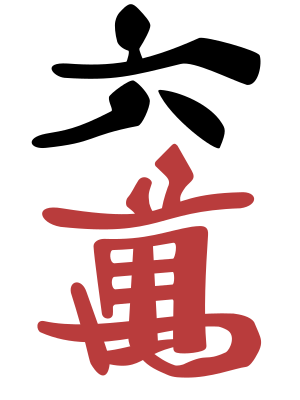
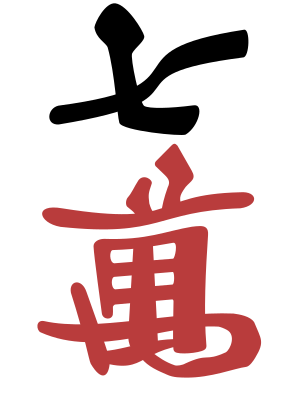
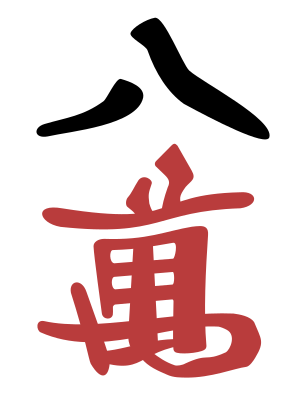
Try the tiles one by one. The tiles that work are 2, 5 and 8:
- With 2: a pair of 22 and four runs.
- With 5: a pair of 22, two 345s and two more runs.
- With 8: a pair of 22 and two pairs of identical runs. The same 14 tiles can also be read as 234 234 567 567 88, or as seven pairs; yaku and scoring explains which reading counts.
With any other tile, the 14 tiles cannot be split into four sets and a pair. For example, with 3 there are three 3s, and however you place them, some tiles are left over.
Karaten: a wait that is not a wait
In this hand, 9 also completes the shape, but all four 9s are already in the hand. The real waits are 3 and 6.
The quiz follows this rule (karaten tiles are not waits) and the explanation mentions any karaten tile, so you learn to notice it.
Checklist
- Did you try every tile from 1 to 9, not only the ones next to your shapes?
- Did you look for a second reading of each triplet (as a pair plus one tile)?
- With six pairs, did you check seven pairs?
- Is any wait a tile you already hold four of?