Multi-sided wait patterns
Most chinitsu waits come from a handful of small shapes. Once you recognise them, you can read a hand by splitting it into known pieces instead of trying every tile. Each diagram below shows a shape on its own; in a full hand, the other tiles can add more waits, so always finish with the routine from How to read chinitsu waits.
Runs that can be cut two ways
Nobetan (extended single wait): four tiles in a row. 3456 is 345 + a single 6, or a single 3 + 456, so it waits on 3 and 6.


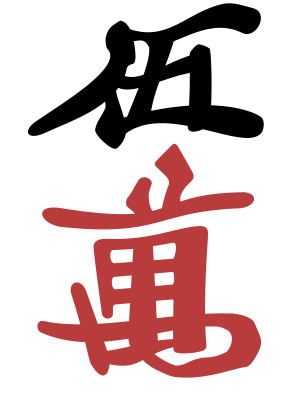

The same idea works with seven tiles in a row. 2345678 can leave a single 2, 5 or 8, so it waits on all three.



Sanmenchan (three-sided wait): five tiles in a row next to a separate pair. 34567 is 345 + 67 (waiting on 5 or 8) or 34 + 567 (waiting on 2 or 5), so together it waits on 2, 5 and 8.

A triplet next to another tile
A triplet can also be read as a pair plus one tile. That second reading is where most missed waits hide.
Triplet + the next tile. 3334 is a tanki on 4 (333 + 4) or a pair with a ryanmen on 2 or 5 (33 + 34).
Near the end of the suit, the ryanmen becomes a penchan. 1112 is a tanki on 2 or a penchan on 3 (11 + 12).
With 2223, the run side opens toward both 1 and 4.
Triplet + a tile one gap away. 3335 is a tanki on 5 or a kanchan on 4 (33 + 35).
Pair + two tiles in a row. 4456 is a tanki on 4 (4 + 456) or a pair with a ryanmen (44 + 56, waiting on 4 or 7).
Triplets inside longer shapes
When a triplet sits next to a run, the readings multiply. These seven-tile shapes each wait on five tiles.
2223456: 222 + nobetan 3456 (3 or 6), 22 + 234 + 56 (4 or 7), or 22 + 23 + 456 (1 or 4).
4445666: 444 + 666 + single 5, 44 + 456 + 66 (shanpon on 4 or 6), 444 + 56 + 66 (4 or 7), or 44 + 45 + 666 (3 or 6).
5556777: 555 + 777 + single 6, 55 + 567 + 77 (shanpon on 5 or 7), 555 + 67 + 77 (5 or 8), or 55 + 56 + 777 (4 or 7).
A triplet with a pair elsewhere in the hand: 555 + 67 waits on 5 or 8, and 55 + 567 makes a shanpon with the other pair.
The nine-sided wait
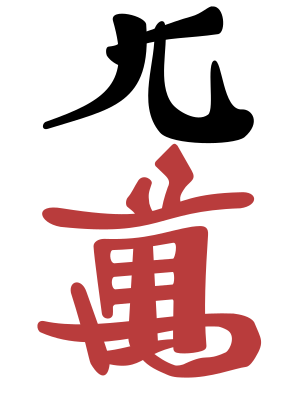
The best-known one-suit shape is 1112345678999. It waits on every tile from 1 to 9, and every win is the yakuman chuuren poutou (nine gates). Some rules, such as Mahjong Soul, count this nine-sided version as a double yakuman; EMA rules do not (see yaku and scoring).
How to use these patterns
- Find the triplets first. Each triplet is a place where a second reading may hide.
- Look for runs of four or more tiles in a row; they often hide nobetan or sanmenchan.
- Read the leftover tiles with the patterns above, then confirm by trying each candidate tile.
The waits quiz on this site uses exactly these shapes. Its explanation shows every reading for each wait, so you can compare it with your own.